
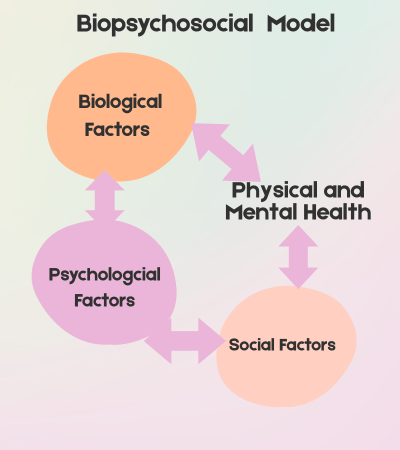
The biopsychosocial model explains health as the product of three connected forces: biology, psychology, and social environment. No single factor works alone. A person’s genes, mindset, and surroundings constantly shape one another, and together they decide whether someone stays well or becomes ill.
Psychiatrist George Engel introduced this model in 1977 as a direct challenge to the older biomedical model, which looked at disease as a purely physical malfunction. Engel argued that doctors who ignore a patient’s emotions, relationships, and living conditions miss half the picture. Nearly five decades later, his framework remains a core teaching tool in medicine, psychology, and nursing programs across the United States.
What is the Biopsychosocial Model?
The biopsychosocial model states that health and illness result from the interaction of three factors, not one. A person’s physical body, mental state, and social world are treated as a single connected system rather than separate categories.
This shift matters because the older biomedical model reduced illness to biology alone. Two patients with the identical diagnosis, say, chronic back pain, can have very different outcomes. One recovers quickly. The other develops long-term disability. The difference often comes down to stress levels, job satisfaction, financial pressure, and family support, none of which show up on an X-ray.
Clinicians who use this model ask broader questions during an evaluation. They do not stop at symptoms. They ask about sleep, relationships, work stress, and coping habits, because each of these can speed up recovery or slow it down.
Three Basic Parts/Components of the Biopsychosocial Approach to Health and Illness
-
Biological Factors
Biological factors cover the physical machinery of the body: genetics, brain chemistry, hormone levels, immune function, and inherited conditions. A family history of depression, for example, raises a person’s biological risk before any life event ever occurs. Changes in neurotransmitters like serotonin and dopamine are also linked to conditions such as depression and schizophrenia.
-
Psychological Factors
Psychological factors include thought patterns, emotional regulation, coping style, and personality traits. Anxiety and depression frequently show up as physical symptoms, including stomach pain, muscle tension, and fatigue. The reverse also happens. Someone living with chronic pain often develops a fear of movement, which then feeds back into more emotional distress and more physical pain. This loop between mind and body is one of the clearest examples of the model in action.
-
Social Factors
Social factors include income, housing stability, family relationships, workplace conditions, and community support. Research on twins has shown that environment plays a measurable role in health outcomes, independent of genetics. A person raised in a financially unstable household, or one who lacks a support system, faces a documented higher risk of depression and substance use. Air quality, nutrition access, and school environment also fall into this category.
Biopsychosocial Model of Mental Health
Mental health conditions rarely trace back to one cause. Schizophrenia offers a clear case study. Genetics create the underlying vulnerability, but a chaotic home environment or a major loss often acts as the trigger that brings the condition forward. Neither factor alone explains the full picture.
The same pattern shows up in suicide risk. Financial hardship, repeated failure, and a lack of social support build psychological strain over time. Add a biological predisposition toward mood disorders, and the risk compounds. This is why modern treatment plans rarely rely on medication alone. Therapy, lifestyle change, and social support usually work alongside biological treatment for a fuller recovery.
For a broader view of how these pieces fit together, see our guide on the three key aspects of mental health.
and Biopsychosocial model of depression
Why the Model Matters for Treatment
Health professionals who apply this model build more complete treatment plans. A therapist treating anxiety, for instance, might address biological symptoms through medication, psychological patterns through cognitive behavioral therapy, and social stressors through workplace or family support. Addressing only one layer, while ignoring the other two, tends to produce partial or short-lived results.
This is also why workplace stress has become such a heavily studied social factor. Chronic job strain touches all three domains at once, since it disrupts sleep and hormone regulation, fuels anxious thinking, and often isolates a person from support at exactly the moment they need it most. Our article on signs of workplace burnout breaks down how this plays out in practice.
Strengths and Limitations of the Model
The biopsychosocial model’s biggest strength is its completeness. It gives clinicians and researchers a framework that reflects how health actually works, as a web of interacting causes rather than a single trigger.
The model does have real criticism attached to it. Some researchers argue it is too broad to test scientifically, since it does not specify exactly how much weight to give each factor in a given case. A 2004 review in the Annals of Family Medicine noted that while the model is widely used in clinical training, it functions more as a philosophy of care than a strict, testable formula. This does not remove its value. It simply means the model works best as a guiding lens, not a rigid checklist.
References
- National Institutes of Health (NIH) — nih.gov
- American Psychological Association (APA) — apa.org
- Borrell-Carrió, F., Suchman, A.L., Epstein, R.M. (2004). The Biopsychosocial Model 25 Years Later. Annals of Family Medicine, 2(6), 576–582