
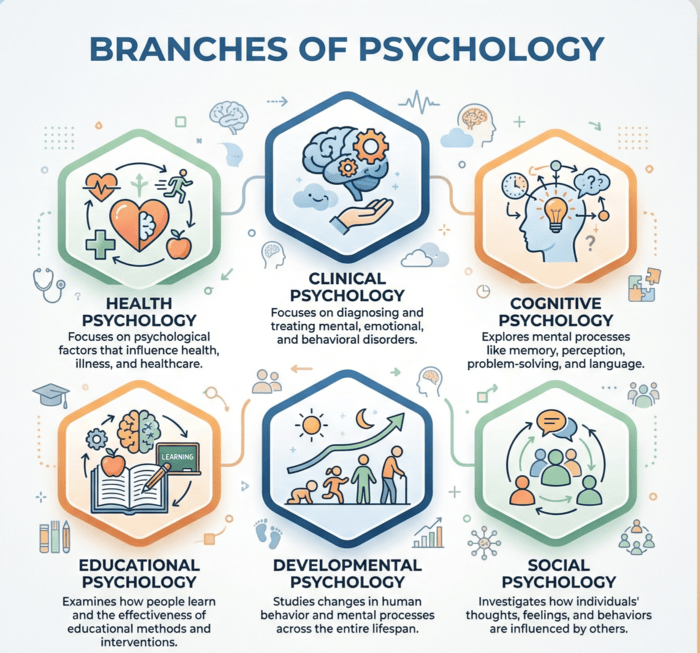
Psychology is a branch of science that studies the mind and behavior, and it touches almost every part of our lives from personal experiences to social interactions and even politics. Like other sciences, psychology is divided into different branches to help us understand it more deeply.
In this article, we explore the various branches of psychology to show how wide-ranging this field is and how closely it is connected to you and the world around you.
Related: What is Psychology?
Related: Schools of Thought in Psychology
Some branches of Psychology are as follows:
Applied Psychology
Applied psychology focuses on understanding the human mind and behavior and using that knowledge to solve real-life problems. It relies on psychological theories and research methods to explore how people think, feel, and act. It examines the core principles of human behavior, including perception, learning, memory, motivation, personality, and emotion. Applied psychology helps us understand both visible behaviors and the hidden thoughts, emotions, and motivations that underlie them.
Clinical Psychology
Clinical psychology is a field of psychology that focuses on understanding mental health concerns. It involves identifying and diagnosing psychological difficulties and mental disorders, as well as helping people manage and overcome them through appropriate treatment plans and support through therapeutic techniques.
Developmental Psychology
Developmental psychology focuses on how people grow and change physically, mentally, emotionally, and socially throughout their lives. It also examines how genetics and environmental factors interact to shape behavior.
Cognitive Psychology
Cognitivepsychology looks at higher mental processes like memory, language, problem solving, reasoning, and thinking. It employs research methods and brain-imaging tools to understand how these mental processes function and how they impact behavior and personality.
Health Psychology
Health psychology is important because it helps us understand how mental, physical, social, emotional, and spiritual factors are all connected and together influence a person’s overall well-being. It also examines the psychological concepts underlying the treatment of illnesses and how individuals respond to medical care.
Counselling Psychology
Counselling psychology is all about helping people navigate life’s ups and downs—whether it’s dealing with grief, stress, relationship challenges, or major life changes. It doesn’t just help you cope; it supports your overall well-being and helps you feel a real sense of achievement. Beyond personal issues, counselling psychology also guides students through academic challenges and offers support in the workplace.
Bio-Psychology
It focuses on understanding the biological basis of behavior. It looks at how different parts of the brain work, how neurotransmitters affect us, and how the brain communicates with the rest of the body. Overall, it helps explain how the brain’s physical structure influences behavior.
Social Psychology
It is the scientific study of human behavior in social contexts. This field of psychology sits at the crossroads of sociology and psychology. It focuses on understanding how people behave in social situations and how our thoughts, emotions, and actions are influenced by other people and our surroundings.
Related: Causes of Social Change
Education Psychology
Educational psychology is all about understanding how people learn and how different teaching methods impact learning. It looks at students’ cognitive, emotional, and academic development, as well as individual learning differences. By studying these aspects, educational psychology helps teachers improve their teaching strategies, making learning more meaningful, engaging, and effective for every student.
Forensic Psychology
This branch of psychology looks at why certain behaviors lean toward crime and how criminal activities can influence both the brain and behavior. It also supports the legal system by helping identify offenders while exploring the deeper psychological reasons behind crime and an individual’s criminal behavior.
Related: What is Forensic Psychology?
Related: Ethical Considerations in Forensic Psychology
Other Branches of Psychology
Industrial Organization Psychology
Industrial organizational psychology is about using psychology in the workplace to make things better for both employees and organizations. It focuses on improving the relationship between people and their jobs, increasing job satisfaction, and helping employees perform their work more effectively.
Sports Psychology
Sports psychology is all about the mental side of sports. Athletes need more than just physical strength to succeed; they also need a strong and healthy mind. To reach their full potential, they must learn how to handle pressure and stay mentally tough. Sports psychology helps them cope with anxiety, depression, fear of failure, and even panic attacks. Because of this, it plays a very important role in supporting athletes’ mental health and overall performance.
Environmental Psychology
Environmental psychology is all about understanding the connection between people and the spaces around them. It looks at how our surroundings—both natural and built—affect the way we think, feel, and behave, as well as our overall well-being. At the same time, it also explores how people impact the environment. In essence, this field studies the two-way relationship between humans and the world we live in, helping us create spaces that support better experiences and healthier lives.
Political Psychology
Political psychology explores how psychological and social factors shape politics. This field looks at how people’s behavior influences political outcomes—such as how they decide who to vote for, how they respond to political messages and propaganda, and how they view their political leaders. It also examines how a country’s political systems and policies affect the behavior, thinking, and mental well-being of its citizens.
Military Psychology
Military psychology focuses on the mental and emotional well-being of military personnel. It applies psychological principles to help soldiers build resilience, develop coping skills, and stay emotionally strong in high-pressure situations. This field also plays an important role in recruiting and training personnel, strengthening their behavior, emotional regulation, and problem-solving skills

2 comments on “Different Branches of Psychology”