
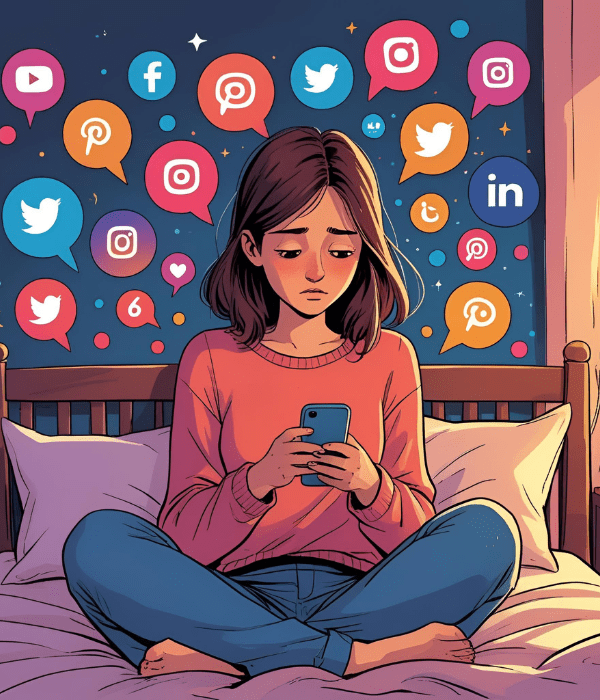
Social media refers to interactive online applications and tools through which users interact. Social media may include social networking applications such as Instagram, Snapchat, Facebook, TikTok, as well as social gaming applications. In recent years, social media has become a daily part of adolescents’ lives. It allows them to share and create content easily. However, there are growing concerns about its negative effects on adolescent mental health.
Social Media and Mental Health
Although social media has some positive aspects, it has a strong negative impact on mental health. Long-term use can lead to depression, feelings of inadequacy, loneliness, and disconnection from real life. Many people turn to social media to escape their problems and loneliness instead of solving them, which only makes these issues worse. As a result, they feel more isolated and worthless. People also compare their lives to the idealized lifestyles they see online, try to copy others, and present fake versions of themselves, which increases anxiety and depression. Excessive use also creates a fear of missing out, causing users to constantly check notifications and depend heavily on social media. This addiction leads to restlessness, loneliness, and emotional instability. Therefore, excessive social media use seriously harms mental health.
Effects of Social Media on Adolescents’ Mental Health
Excessive use of social media has impacted the mental health of adolescents. Adolescence is a high-risk period for developing mental illness. Nearly one in five teenagers has a diagnosable mental disorder. A study from the University of California, San Francisco, shows a sharp rise in mental health problems in recent years. Depression and suicide rates have increased the most, causing serious concern.
Different studies have shown that the alarming negative impacts of social media on adolescents’ mental health are grave. Spending more time on electronic media each week was associated with lower self-reported happiness, life satisfaction, and self-esteem. Heavy use of social media has been associated with many mental well-being problems, including depression, social anxiety, body image problems, disordered eating, and externalizing problems.
Cyberbullying is another serious problem linked to social media use. Online platforms have increased cases of threats, privacy misuse, and harassment. New technologies, such as deepfake tools, have made these issues even worse and more harmful. These experiences strongly affect adolescents’ emotional and mental health. Research shows that around 59 percent of U.S. adolescents have faced bullying online. Peers bully others online, leading to higher rates of self-injury and suicidal behavior. Platforms like Twitter often become spaces where rumors, lies, and abusive comments spread quickly, leaving deep and lasting emotional scars.
Another significant concern is that easy access to content related to self-injury and suicide can potentially increase suicide risk in already vulnerable youth.
Social media interactions like online conflict, drama, and social exclusion can place adolescents in risky situations. These platforms also encourage constant social comparison. As a result, many adolescents experience less sleep, poor sleep quality, and daytime tiredness.
