
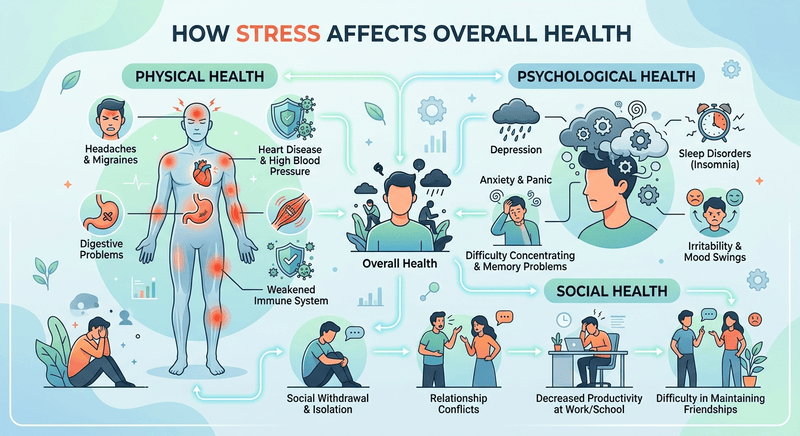
Stress is an uncomfortable physical, emotional, and psychological reaction to threatening, unwanted, or pressured situations. Many people think stress is only a psychological issue that affects mental health, but that’s not true. Stress has serious and damaging effects on overall health and wellbeing. And if you believe health is only about the body, you might be missing the bigger picture. Health is a complete concept that includes physical, psychological, emotional, and social wellbeing.
In this article, we will explore how stress is linked to illness and how it affects all these aspects of health.
Stress and Physical Health
Does Stress affect the Body?
Stress can be closely linked to illness, especially when your body reacts strongly to pressure. Simple situations like spilling coffee before a big presentation or getting stuck in traffic on the way to an exam can trigger stress. In these moments, the hypothalamus signals the release of hormones like cortisol and adrenaline, putting the body into a fight-or-flight mode. Your heart beats faster, breathing speeds up, and muscles tighten. These responses are natural and help you deal with challenges or discomfort caused by internal or external factors.
However, when this stress response is triggered again and again by daily pressures, it does more than just tire the mind. Over time, it begins to harm the body. Constant stress keeps the body in a state of alert, creating ongoing strain and wear and tear on body systems. This weakens the body and makes it more vulnerable to illness.
As a result, long-term stress can lead to many health problems, such as heart palpitations, high blood pressure and hypertension, stroke, a weakened immune system, muscle tension, menstrual problems, peptic ulcers, migraines and headaches, insomnia, fatigue, endocrine disorders like diabetes, and even conditions like Alzheimer’s disease, which may be linked to inflammation as part of the stress response.
Related: https://thoughtmending.com/why-do-i-get-headaches-when-anxious/
Stress and Psychological Health
Stress has a strong impact on psychological health and is a major factor behind many serious mental health problems. When stress becomes constant, it makes a person’s mental and emotional wellbeing more vulnerable to conditions like acute stress disorder, depression, and anxiety. Ongoing stress increases cortisol levels, which can disturb the balance of neurotransmitters that control mood, behavior, and emotions.
As a result, people may experience irritability, mood swings, excessive worry, emotional exhaustion, feeling overwhelmed, or deep sadness. In more severe cases, stress can even contribute to stress-induced psychosis, which may include temporary hallucinations, delusions, and intense emotional distress, often requiring therapy and medication. Research also suggests that chronic stress is linked to more complex conditions such as post-traumatic stress disorder (PTSD), schizophrenia, bipolar disorder, and substance use disorders.
How does Stress Affects Social Health?
Stress does not only come from social problems, it also harms social health in many ways. When stress becomes chronic, it can lead to social isolation, delays in work and responsibilities, and constant worry over small issues. People may start avoiding others, which weakens their social connections and sense of belonging. This social withdrawal can also affect mental health and increase stress levels even more. At the same time, delaying tasks and responsibilities can create conflict with others and add further pressure. As social connections fade, support from others becomes limited, which makes it harder to cope and can lead to even more stress and related mental health problems.
Here is a brief overview of causes of the stress:
External Causes of Stress
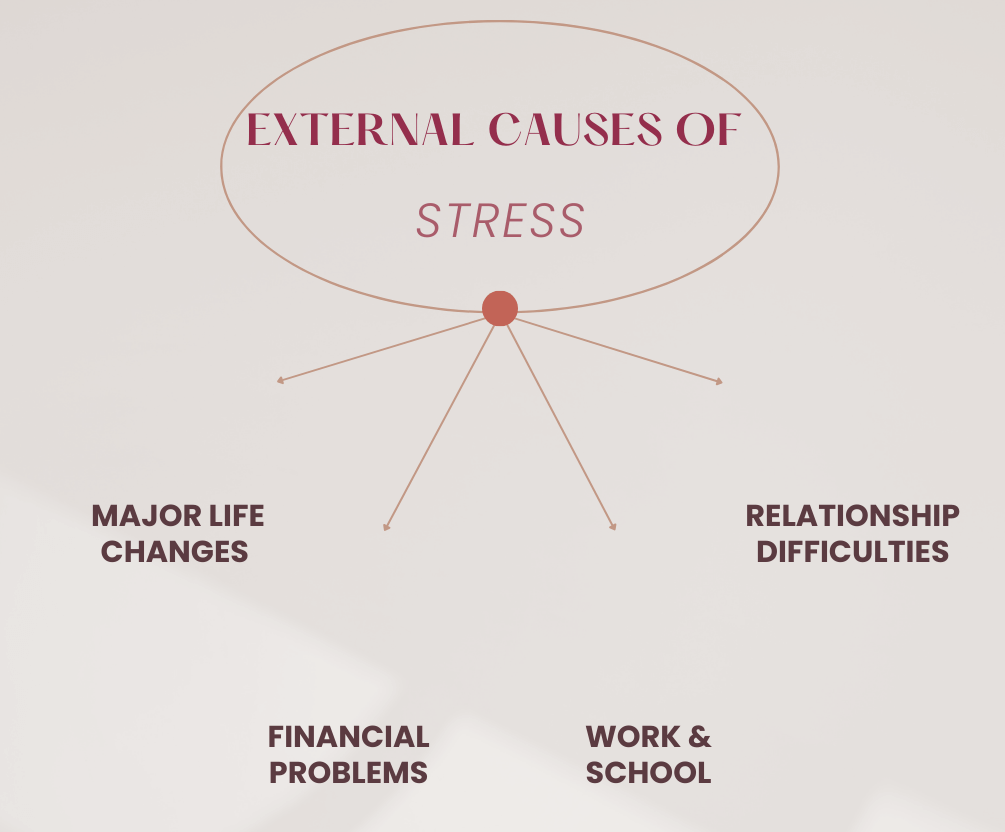
External factors play a big role in causing stress in our daily lives. Major life changes, such as moving to a new place, losing a job, or starting something new, can create uncertainty and pressure. Relationship difficulties, whether with family, friends, or partners, can also add emotional strain. Financial problems are another common source of stress, especially when it becomes hard to manage expenses or maintain stability. Along with this, challenges at work or school, like heavy workloads, deadlines, or performance pressure, can make stress even worse. All these external factors can build up over time and significantly affect overall wellbeing.
Internal Causes of Stress
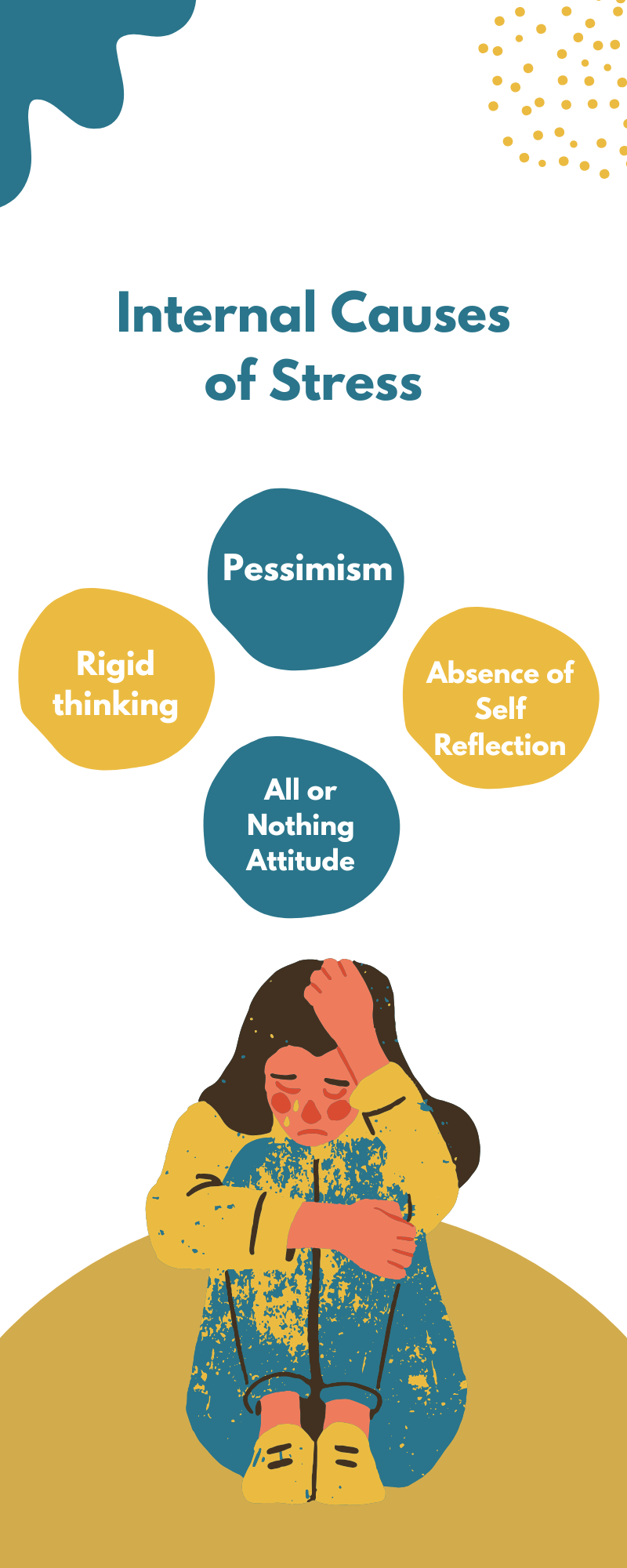
Not all stress comes from the outside—sometimes it begins within us. Internal causes of stress are often linked to the way we think and process situations. For example, a pessimistic mindset can make us expect the worst, even when things may turn out fine. Rigid thinking can make it hard to adapt to change or see different perspectives, which increases frustration. An “all-or-nothing” attitude can also create pressure, where anything less than perfect feels like failure. At the same time, a lack of self-reflection can prevent us from understanding our emotions and reactions, making stress harder to manage. Together, these internal patterns can quietly build up and play a major role in increasing stress in everyday life.
Tips to Manage Stress
- Set boundaries: Learn to say no when needed and protect your time and energy.
- Use positive affirmations: Remind yourself of encouraging and supportive thoughts each day.
- Focus on your strengths and accept your weaknesses: Appreciate what you’re good at while being kind to yourself about areas you’re still improving.
- Look for the positive and focus on solutions: Try to see the brighter side of a situation, then take practical steps to solve the problem.
- Meditate: Spend a few minutes daily calming your mind and staying present.
- Stay physically active: Regular exercise helps reduce stress and boosts your overall mood.
Related: https://thoughtmending.com/coping-with-stress-the-four-as-technique/